.jpg)
PROJECT SUMMARY
Abject poverty being is rife in the villages or communities around Kagwane Mountain forest. This makes them very vulnerable. The struggle with poverty gives pressure on the Kagwane Gorilla Sanctuary with a gradual natural forest loss. This threatens the survival of flagship species, the Cross River gorilla (Gorilla gorilla diehli) classified as Critically Endangered by IUCN’s Red List besides other rare species of flora and fauna. Thus there is the pressing need to support the villages to alleviate poverty while contributing to conservation. Our organisation thus had to intervene with a pilot project named “Kagwene Gorilla Sanctuary Beekeeping and Conservation Pilot Project, Cameroon”.
Project Goals:
(1) To Provide the communities a new alternative stream of income through training and support in beekeeping and
(2) Aiding conservation by education linked to beekeeping.
Project Beneficiaries
Being a pilot project the beneficiaries were selected only from a few villages (four) that border the Kagwene Gorilla Sanctuary . The four (4) beneficiary villages in this pilot phase included: (1) Amassi (2) Bantakpa (3) Ekaw and (4) Ngwo Village
The recruitment of community trainers and beneficiaries were done paying special attention to women, indigenous groups, honey hunters, handicap persons and traditional beekeepers. These recruitments were done under very close collaboration with the various village Chiefs (or Fon’s) following a couple of open meetings with their respective subjects (people).
Details of direct project beneficiaries according to communities/villages
Amassi : 11 people
Bantakpa: 11 people
Ekaw: 11 people
Ngwo (Sub Group I): 11 people
Ngwo (Sub Group II): 11 people
Important Project Outcomes
1) Five new Beekeepers groups have been formed. Each of the beekeepers cooperatives have independently formed a management committee or bureau assigned with the running of their respective groups. The new beekeepers groups include:
Amassi Beekeepers Cooperative (ABC),
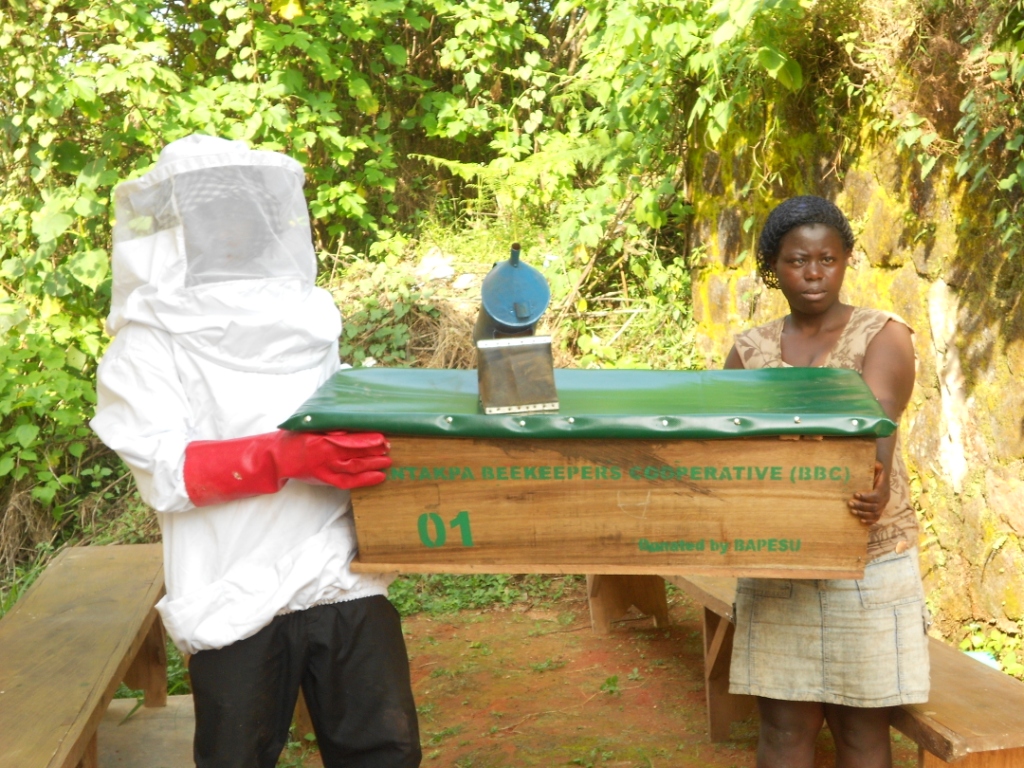
Bantakpa Beekeepers Cooperative (BBC),
Ekaw Beekeepers Cooperative (EBC),
Ngwo I Beekeepers Cooperative (NBC I) and
Ngwo II Beekeepers Cooperative (NBC II).
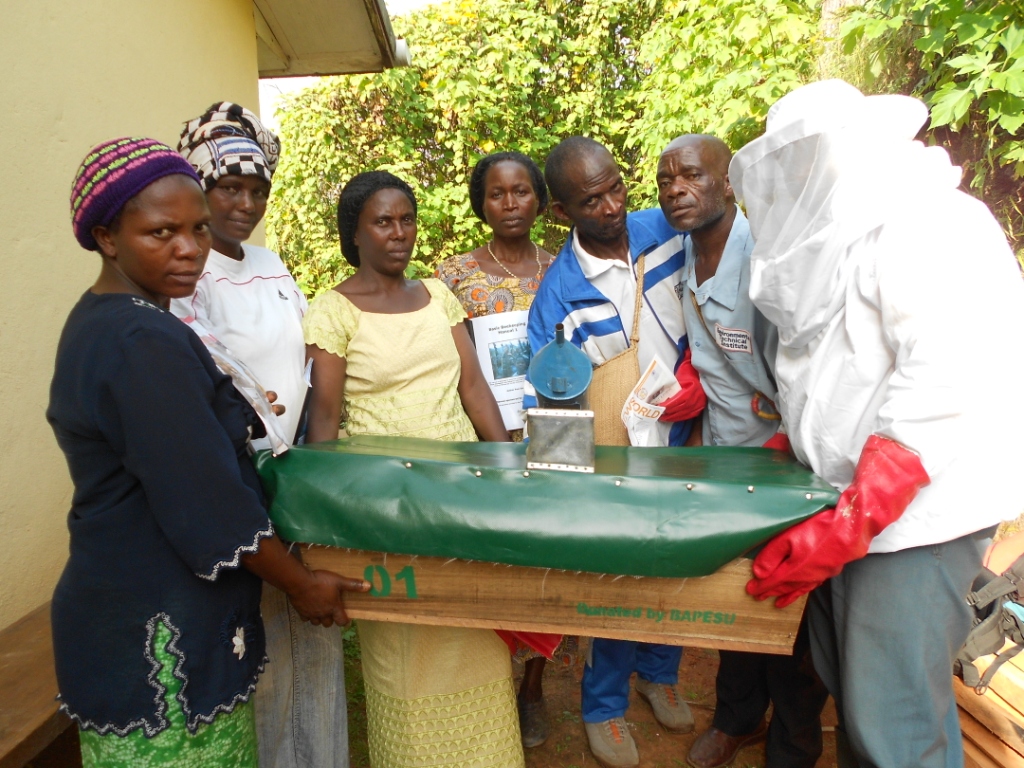
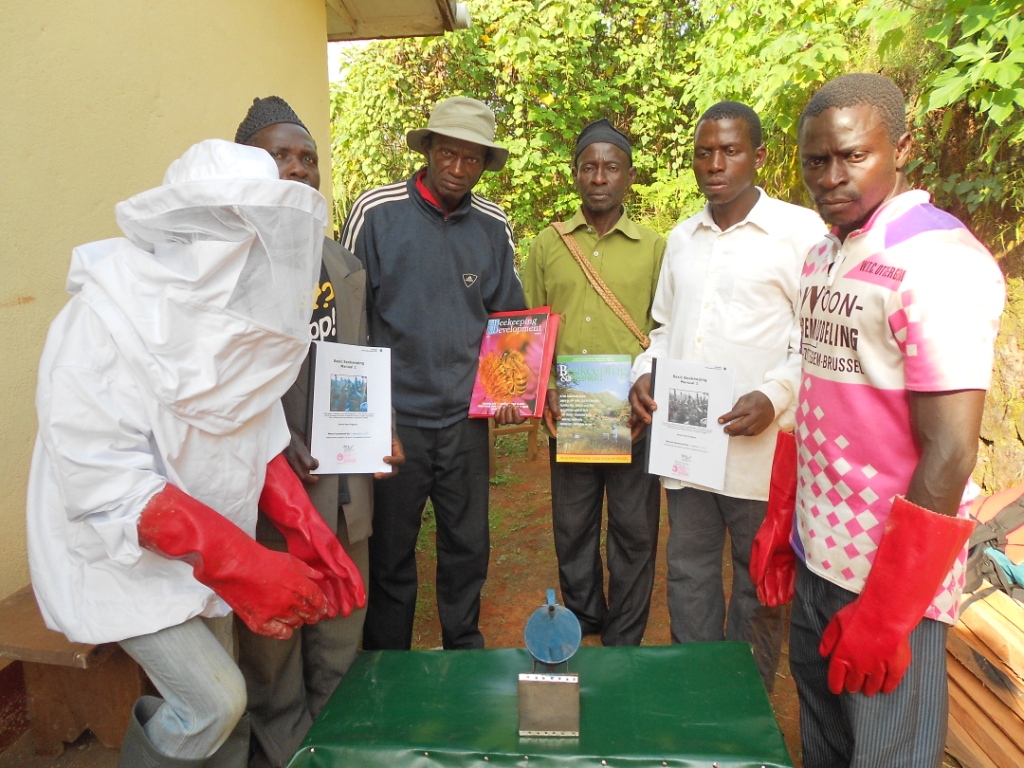
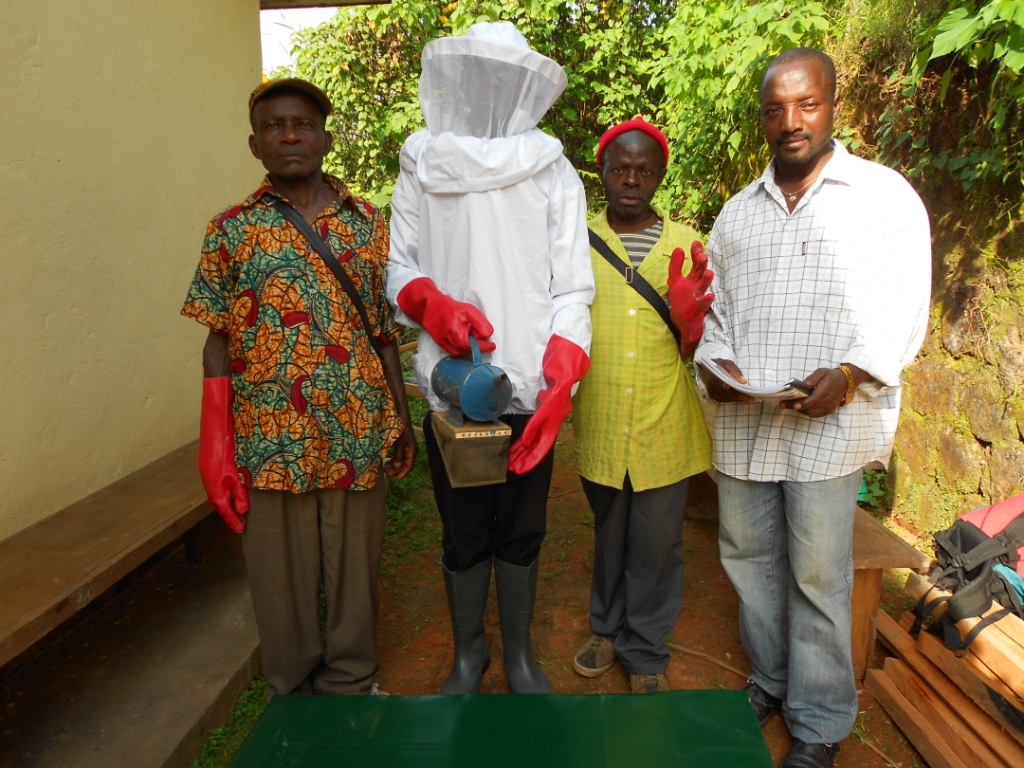
2) Five Apiaries have been set up by the five groups respectively with the support of donated equipment that include: 20 KTB hives, beekeepers gloves, beekeepers protective suits, rain boots, Beekeeping manuals by Pam Gregory, hammers and saws for construction of more hives. It should be highlighted that more than half of the donated hives have already been colonized by honeybees, this including the traditional hives that each member of the respective beekeepers cooperative made.
3) There is already a positive change in attitude with increase consciousness of the local people towards local nature conservation. They now see a strong connection of honeybees and their forest and some have started planting bee loving trees such as “bottle brush plant”.
4) Fifty-five (55) local people have acquired sound skills in basic beekeeping. More and more people from the neighbouring villages that were not covered in this pilot phase are expressing serious interest in the project.
PROJECT PARTICULARITIES
- Fully participatory,
- Strong project ownership by beneficiaries.
- Gender mainstreamed (nearly half of the beneficiaries made up of women).
The Involvement of Other Partners and their roles:
The pilot project worked in very close collaboration with other partners and stakeholders. This includes but not limited to Cameroon’s Ministry of Forestry and Wildlife (MINFOF) and the Centre for Indigenous Resources Management and Development (CIRMAD).
Cameroon’s Ministry Of Forestry And Wildlife (MINFOF): The Ministry of Forestry and Wildlife strongly supports and encourages this project as it goes in line with complimenting conservation efforts that has been achieved so far by MINFOF and other partners such as the World Conservation Society (WCS). The government through the Office of The Kagwene Gorilla Sanctuary provides administrative and field support. MINFOF helps by providing our project team with guides on government policy and laws regarding livelihood support and conservation issues in the area.
The Centre for Indigenous Resources Management and Development (CIRMAD): CIRMAD trained the beneficiaries on small business and marketing Skills (Simple Bookkeeping and Business Management Skills). The importance of the training on small business is to enable the project beneficiaries to make their beekeeping profitable and sustainable (with an entrepreneurial spirit and sound management).
THE PROJECT PERSPECTIVES
We are very happy about the project achievements so far. The project has achieved beyond the expected outcomes (5 Beekeepers groups and 5 apiaries established as opposed to 2 beekeepers groups and 2 apiaries initially planned). We are very happy to continue the work in contributing to local conservation.
BAPESU is currently carrying follow-up activities with the newly created beekeepers cooperatives in the form of refresher training, guidance, conservation education outreach and more beekeeping equipment support.
It is very importantly for the project to continue thriving and move from pilot phase and advance to cover the more communities in the Kagwene Mountain Forest area. Following the success of the pilot phase, we will continue with this model and apply it in the next phase (phase II).
BAPESU is thus seeking more funding to cover more villages or communities. Please support our work by DONATING NOW
This pilot phase of the project has been funded by the Rufford Small Grants Foundation (RSG) in the United Kingdom
